Sourced from the Sea
Preservation of Tabby (Oyster Shell) Brick
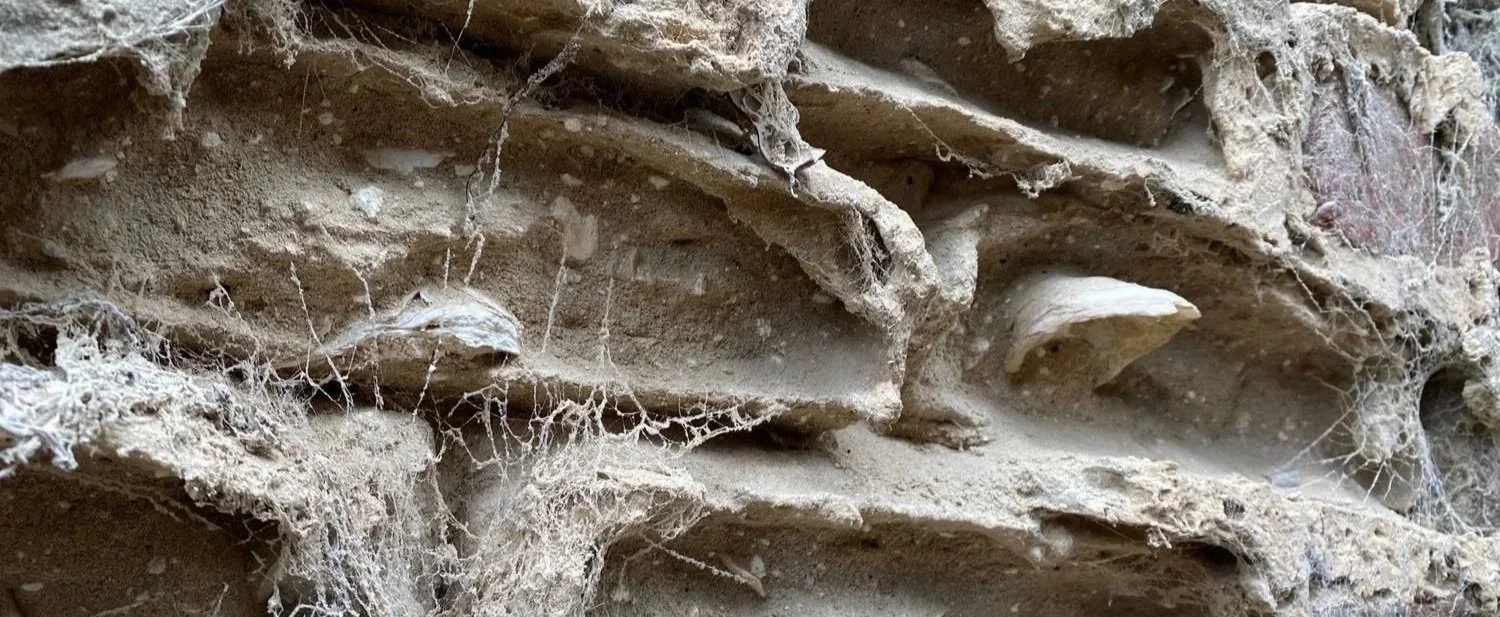
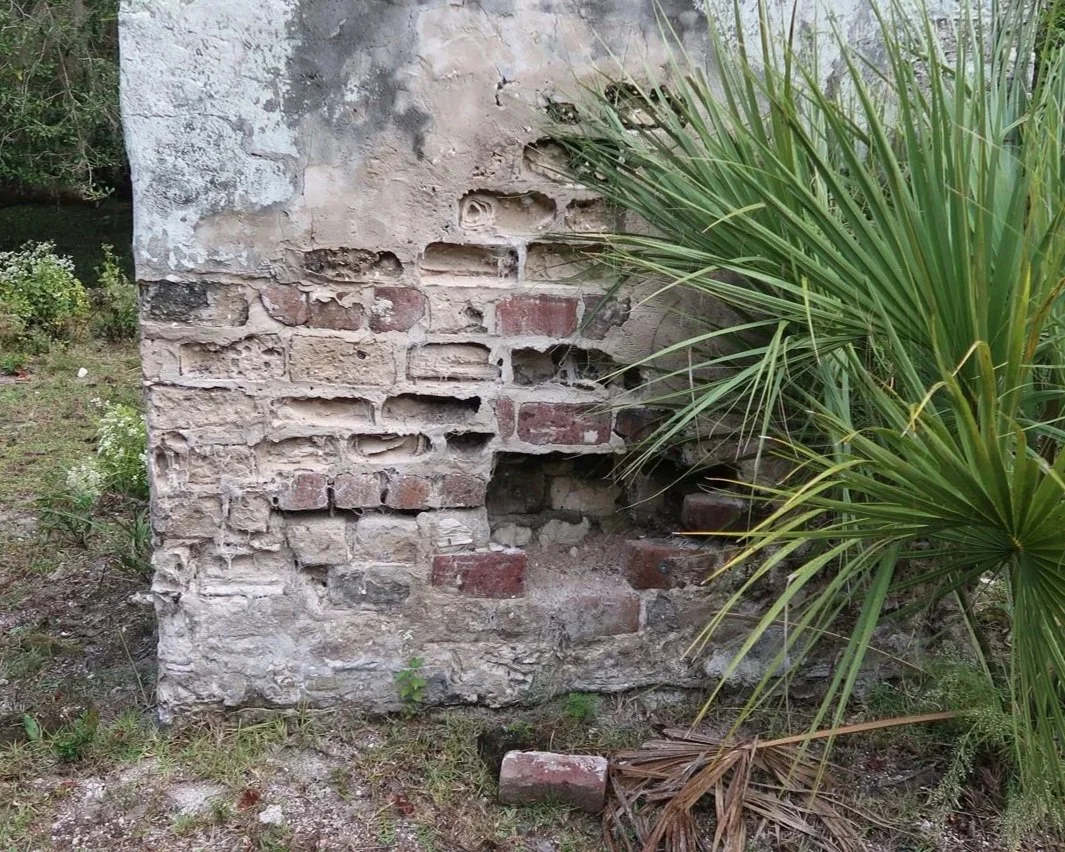
Figure 1. Tabby brick with remnants of stucco.
Early American coastal buildings often used local materials to interesting effect. In the southeastern Atlantic coast of North America, an abundance of oyster shell led to the use of tabby construction. Tabby (also known as Tapia, Tabbi, Tabique, and the nickname “coastal concrete”) is a building material used by early Spanish settlers in North Carolina and Florida, and later by British colonists in coastal South Carolina and Georgia.
Tabby is a type of concrete construction that uses shell lime (created by burning oyster shells) mixed with water, sand, crushed shells, and sometimes ash. The mix was usually tamped into formworks to create walls, like poured-in-place concrete. Sometimes, it was compacted into smaller molds to create bricks. Tabby was a durable alternative to the more expensive Coquina stone which was also commonly used along the southeastern coast. As tabby was usually covered with stucco, the buildings were often indistinguishable from those constructed of stone (Figure 1). Unfortunately, without proper maintenance, tabby can pose complicated preservation challenges.
Figure 2. An oak tree causing displacement of chimney structure.
JBC was involved with the restoration of the ruins of a 19th century settlement of formerly enslaved people. Chimneys, constructed of tabby brick with red clay brick fireboxes, were all that remained of the wood frame houses lost to fire. The chimneys were subjected to conditions common to most coastal tabby constructions: being built on marshland, surrounded by oak forests, with consistently wet and humid conditions. As a result, the chimneys were severely displaced and deteriorated (Figure 2).
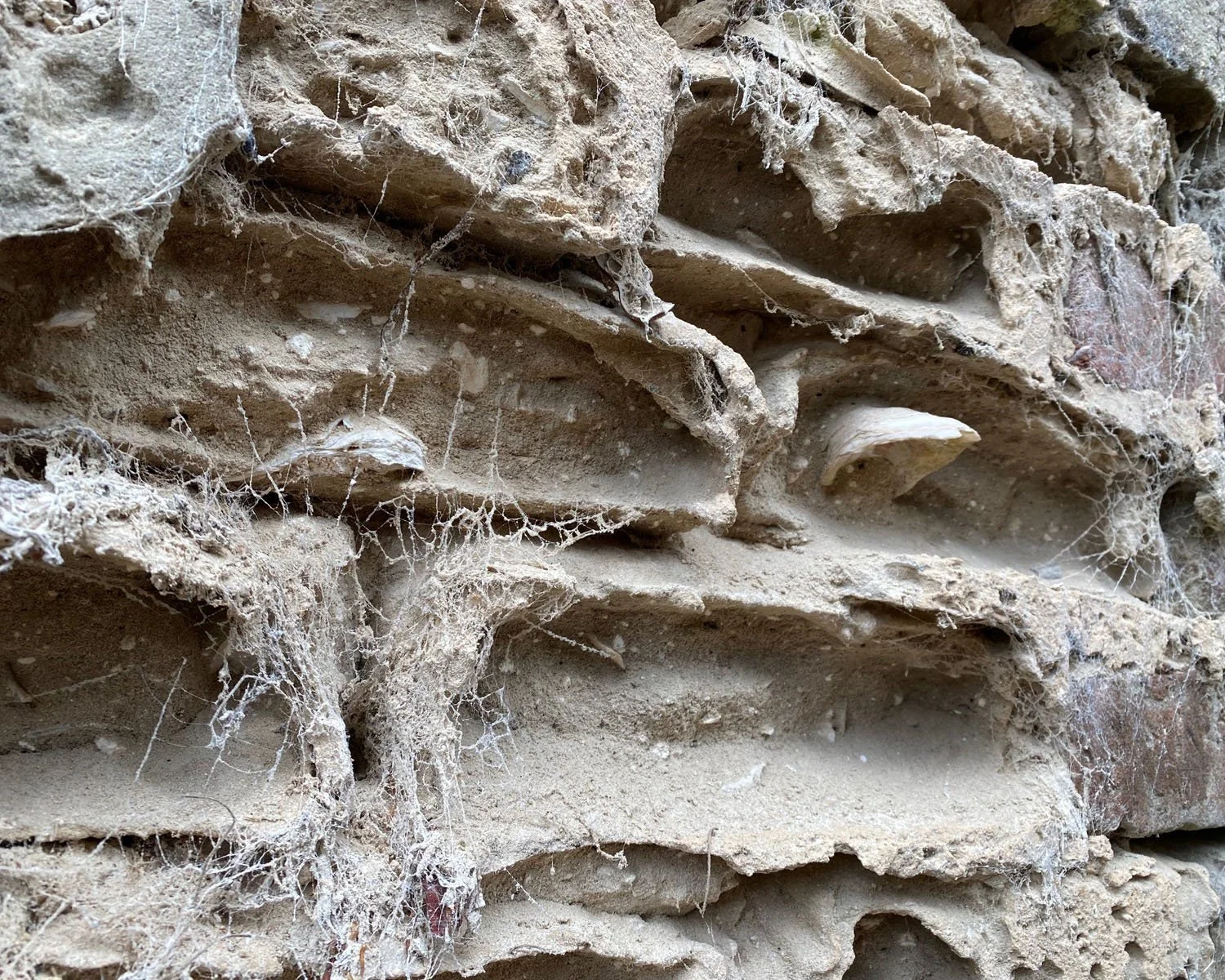
Analysis of the tabby bricks at this site showed they were mixed to a proportion of 1 part lime to 1 part sand to 8 parts large oyster shell fragments. Wood ash identified in the samples was introduced during firing. In addition to the structural damage, the marine environment introduced salts into the brick causing erosion of the surface. The use of overly hard Portland cement repointing mortars also exacerbated the deterioration of the softer tabby brick (Figures 3 and 4).
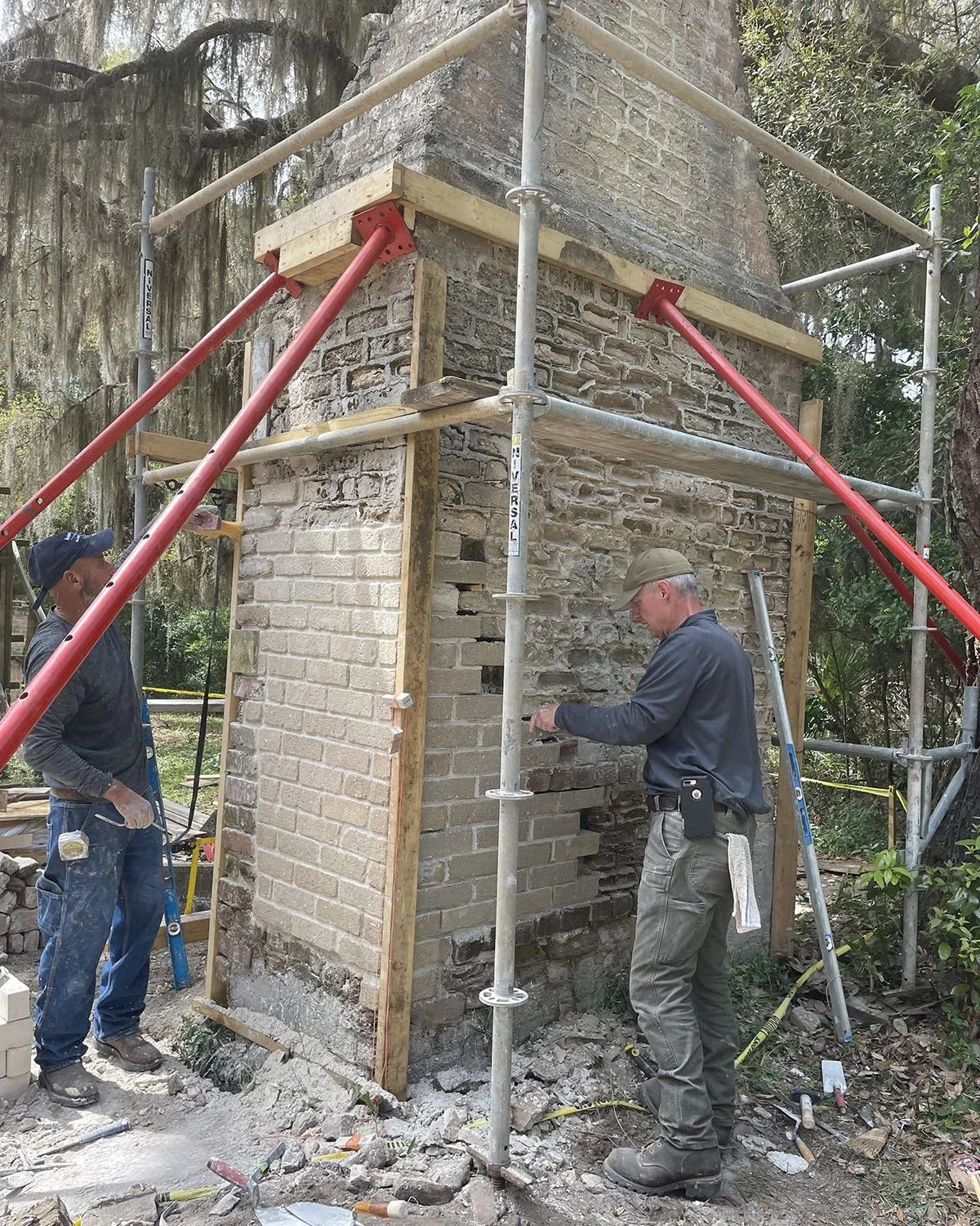
Conservation efforts for the chimneys were aimed at reintroducing sympathetic materials to minimize further deterioration. Softer and more permeable lime-based mortars were used for resetting and repointing. New tabby bricks were needed to replace the severely eroded units. With no commercially available option, the contractor replicated the tabby bricks using local materials creating a custom mix that closely matches the properties of the original. These replication bricks were used for repairs throughout the chimneys (Figure 5).